US president Donald Trump’s decision to pause threatened strikes on Iran’s oil and gas sector while “very good and productive talks” continue has been received positively by Gulf states, whose energy infrastructure could have been caught in crossfire.
Gulf-based commentators have said the US-Iran talks should focus on the removal of energy facilities from warfare.
Before the US and Israel launched their war on Iran on February 28th, Saudi Arabia and the United Arab Emirates (UAE) had focused on de-escalating tensions with Iran despite the regional rivalry between Riyadh and Tehran.
The UAE, Saudi Arabia, Bahrain and Qatar have sought to give the US time and opportunity to degrade Iran’s military and deplete its arsenals to ensure it is no longer a threat to Gulf security.
READ MORE


By taking a pro-war stand and expelling the military attache at Iran’s embassy, Qatar has concluded its role as a mediator in regional disputes. Oman is now the sole member of the six-member Gulf Co-operation Council (GCC) to condemn the war with Iran and could resume its previous role of mediator.
The UAE, Saudi Arabia, Bahrain, Oman, Kuwait, and Qatar founded the GCC in 1981 to co-ordinate policies and promote Islamic values.
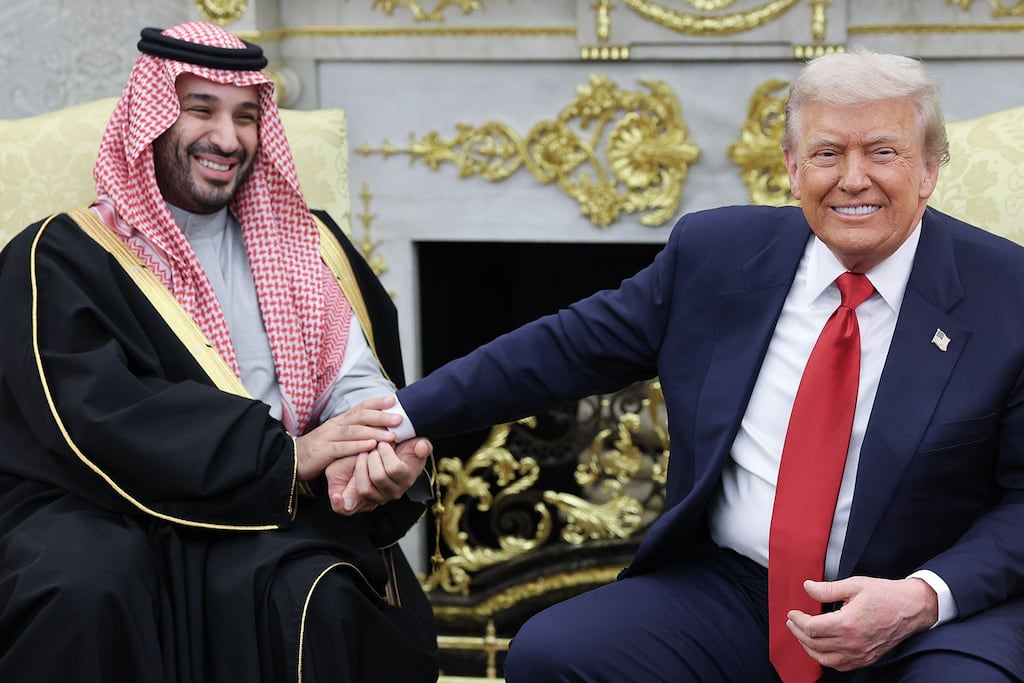
Saudi Arabia has adopted a contradictory position. Official statements have called for diplomatic solutions and Riyadh has denied Washington use of its airspace to strike Iran. However, The Washington Post has reported that Saudi crown prince Mohammed bin Salman repeatedly spoke to Trump in the months before the war and urged him to attack Iran.
The crown prince and other Gulf leaders are in no position to commit forces to the campaign because Israel is involved. Opinion polls across the Arab world consistently show that more than 90 per cent of respondents regard Israel as the chief regional security threat and enemy.
By joining Israel in this war, Saudi Arabia would also jeopardise its guardianship of the Muslim holy shrines in Mecca and Medina. Saudi rule in Arabia has been challenged by the Hashemites who, after 10 centuries, were ousted in 1924 by Abdul Aziz ibn Saud in league with extremist Wahhabis.
The Gulf states face negative immediate and long-term economic consequences from the war. Despite years of efforts to diversify their economies, these states remain dependent on oil exports, 20 per cent of which have stalled after the Strait of Hormuz was effectively closed by Iran.
International Energy Agency head Fatih Birol has said damage to regional infrastructure will take time to repair. He said the negative fallout from the war matches the two 1970s oil crises and the 2022 gas crisis “put together”.
Tourism has suffered, affecting hotels, restaurants, and shops. Foreign professionals and manual workers have fled the Gulf, and Dubai’s role as the main east-west air travel hub has been compromised.
The conflict has warned outside investors, firms and individuals that the region is inherently unstable.