Andy Burnham will become Britain’s seventh prime minister in 10 years by Monday lunchtime, taking over a country whose febrile politics and flaccid economy are still being shaped by the forces that led to the Brexit vote of 2016.
The former mayor of Greater Manchester, who was elected to replace Keir Starmer as leader of the Labour Party on Friday afternoon, insisted that he could give British people their “hope back”.
Burnham predicted that the UK was on the cusp of its “most significant change moment in politics for 40 years” as he prepared to enter Downing Street. He also warned that this was Labour’s “last chance” to change.
“I am ready,” he told party delegates at a speech in London after his elevation to the leadership at his third attempt – he previously failed to win it in 2010 and again in 2015.
READ MORE


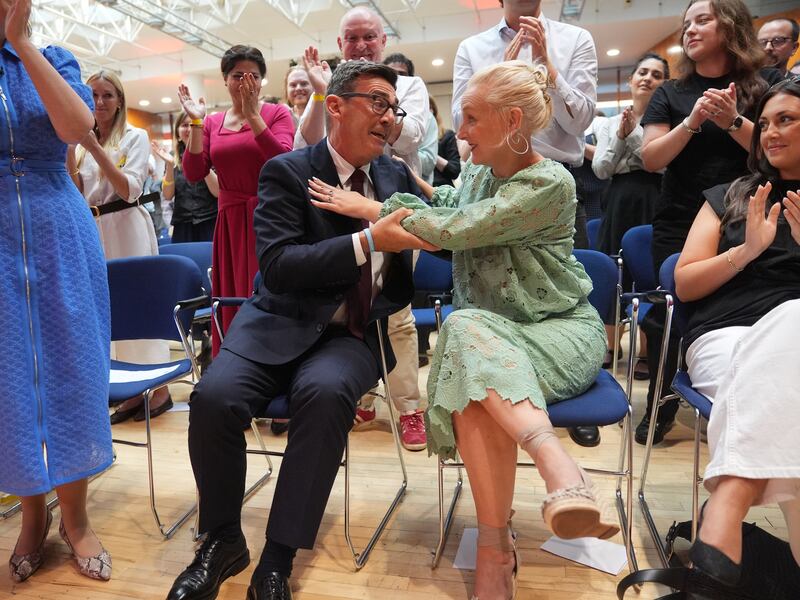
Britain’s incoming prime minister, whose path to the pinnacle of UK political power was paved by an internal Labour coup against Starmer, also warned his party that it must turn away from the factionalism that had “bedevilled” it recently.
“We won’t beat Britain’s new right if we are consumed by infighting and pulling in different directions,” he said, referencing the possibility that Nigel Farage’s populist right-wing party Reform UK could win the next general election to put Labour out of power.
Reform is ahead of Labour in most polls although its lead has slipped in recent months.
Burnham finally realised his ambition of taking over Labour in a coronation instead of a leadership contest, after he was nominated for the position unopposed.
He received the backing of 379 Labour MPs, which made it mathematically impossible for any of his putative rivals to challenge him as they could not have reached the 81 signatures required for a contest.
Among those to formally propose Burnham were former health secretary Wes Streeting, who had mulled his own leadership bid but could not secure enough backers, and Al Carns, the UK’s former armed forces minister who demurred from mounting his own challenge shortly before nominations opened last week.
[ A pub tour of ‘Manchesterism’ as Andy Burnham gets ready for Downing StreetOpens in new window ]
Burnham was also nominated for the Labour leadership by all 11 trade unions affiliated to the party, as well as a dozen other affiliate groups including the Labour Party Irish Society.
Despite his allies having effectively ended Starmer’s political career by threatening to unseat him before he chose to step down instead, Burnham paid a warm tribute to his predecessor, who won a landslide election victory barely two years ago.
“We went from our worst defeat to one of the best victories in our history. Keir put Labour back in a position to change people’s lives,” said Burnham.
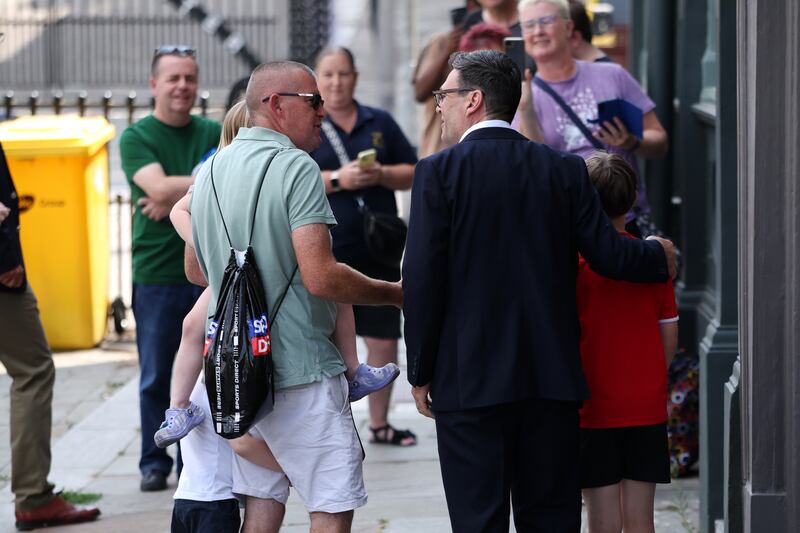
He was previously backed for the leadership by Starmer in a contest 11 years ago, before declining to return the favour when the incumbent ran for the leadership in 2020.
Burnham told Labour he believed Britain had made a “series of wrong turns” in the 1980s, when under former Conservative prime minister Margaret Thatcher England’s north slid towards deindustrialisation, while there were also moves towards privatisation of utilities such as water and power.
Burnham has promised to reverse some of the impacts of those events and rebalance the country’s economy towards growth “in every postcode” and not just the wealthier south.
Attention now turns towards who will join his cabinet. Burnham insisted on Friday that he had not yet made any decisions on who to appoint, although his allies have been briefing in Westminster that Ed Miliband, the party’s former leader, will not be chancellor despite coveting the role.
Experienced minister Pat McFadden has emerged as a contender for the role of secretary of state for Northern Ireland.