Word that days are numbered for Jimmy’s Corner was hardly surprising but it generated an instant outpouring of affection and outrage when the headlines hit the Post and the Times.
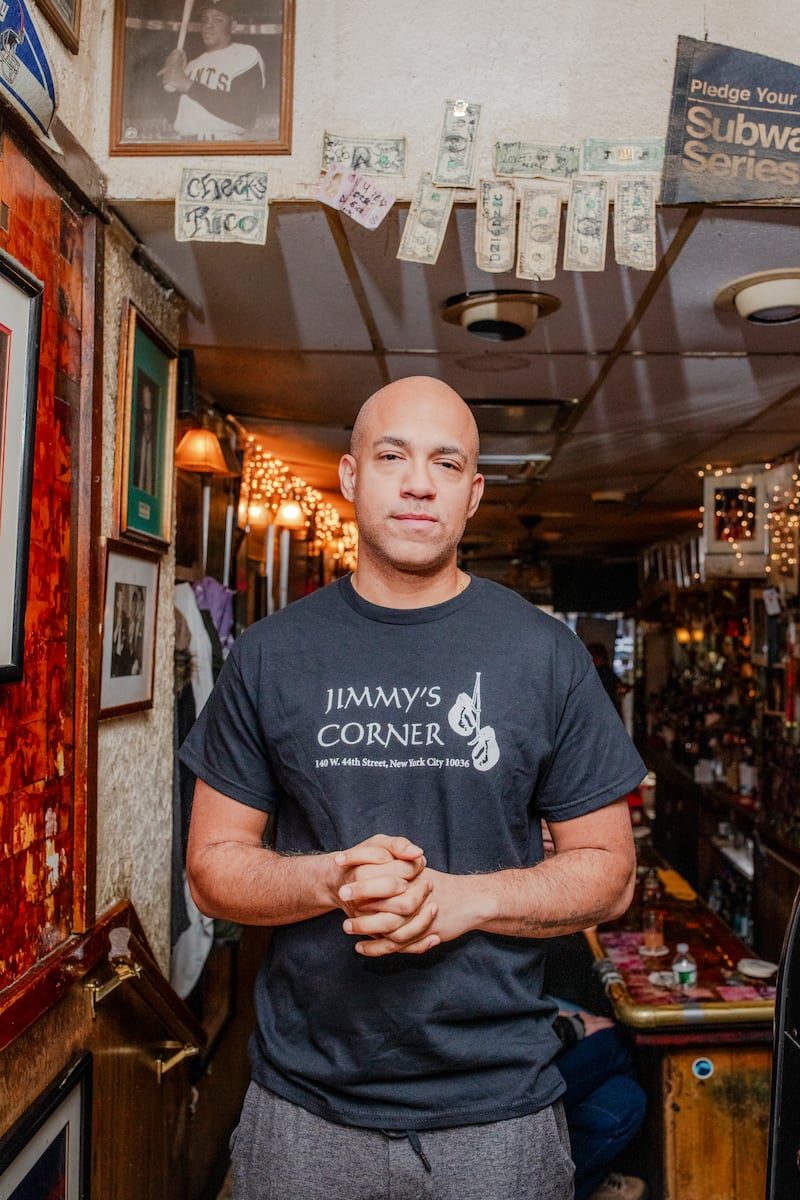
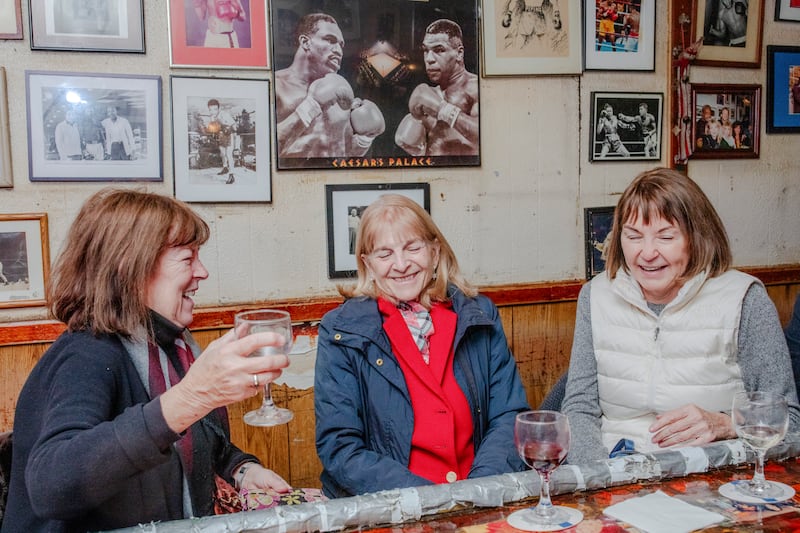
Since 1972, the beat-up and beloved bar has loitered with intent on West 44th Street, just off Times Square, with its plain blue canopy and the walls of its railway carriage interior festooned with photographs and gold carat boxing memorabilia accumulated by its owner, the late Jimmy Glenn.
The interior has changed little in 50 years – a long bar, a duke box and a few seats up the back. Famously, the prices have changed little either – in a city where affordability has become a key issue, Jimmy’s still serves up $3 beers and whiskeys, has never served food and the one written rule is that nobody talks politics.
Jimmy Glenn was a South Carolinian boxer turned trainer who worked and knew many of the greats, met his Polish wife Sweitlana in the bar which they renamed, and ran for 50 years.
READ MORE


It was and is habituated by after-workers, theatre people, newspaper people and occasional celebrities paying homage to Jimmy – Frank Sinatra, Michael Jordan were among those who called in. Jordan must have had to stoop to get through the narrow front door.
This week, Jimmy and Sweitlana’s son Adam revealed that the Durst company which owns the building at 140 W44th is to serve an eviction notice, although the lease runs another five years. Jimmy Glenn died of Covid in 2020.
In many ways, it’s a story as old as the city: real estate and disappeared bars and restaurants. Plenty of feted high-end places have been erased by building sales or hijacked rent over the decades also.
If you walk up Broadway 10 blocks and turn right at West 51st and keep walking you’ll eventually come to 51 West 1st, location of the original Toots Shor’s restaurant which was, in the late 1940s and 1950s, the place for the bright lights people, from the Di Maggio Yankees to Bing Crosby to Marilyn Monroe to a young attorney named Nixon.
The food was notoriously poor – famously, during a power cut which left the patrons in darkness, someone quipped: “They finally electrocuted the chef.” And if you weren’t in Toots inner circle, you waited in line, as Louis B Mayer was once forced to do.
Shor had high-society America in the palm of his hand. He features in the famous opening segment of Underworld, the 1997 novel by Don DeLillo. But he sold his property to William Zeckendorf, one of the city’s more prominent developers, tried to open a new place just one block north and couldn’t recreate the magic.
The stars did not return.
Shor was extremely generous to friends and extremely unreliable with taxes: his business was closed by inland revenue in the 1970s and he died penniless.
Zeckendorf, in a separate tale of spectacular rise and fall, similarly died in bankruptcy. All that remains of Toot’s Shors is a small, terribly poignant plaque.
The city is filled with vanished haunts. The miracle of Jimmy’s Corner seemed to be that it just existed, unchanging and unbothered, through Manhattan’s transformation from the demimonde of the 1970s to whatever it is today.
And what is that? Awash with floods of real estate and finance empire wealth, for sure. Still an overwhelming wonder of human energy and architecture and noise and smells. But sometimes, it seems just a gigantic eating and drinking emporium with spectacular backdrops for the hordes of tourists curating their holiday, each in search of the real New York.
News of the threat to Jimmy’s Corner brought to mind a vital warning essay about the city published in Harper’s by the writer Kevin Baker. He made it clear that having lived in New York through the dire 1970s, a city of cockroaches and needles and ruined buildings, he has seen it at its worst.
“But I have never seen what is going on now: the systematic, wholesale transformation of New York into a reserve of the obscenely wealthy and the barely here – a place increasingly devoid of the idiosyncrasy, the complexity, the opportunity, and the roiling excitement that make a city great,” he wrote in 2018.
“As New York enters the third decade of the twenty-first century, it is in imminent danger of becoming something it has never been before: unremarkable. It is approaching a state where it is no longer a significant cultural entity but the world’s largest gated community, with a few cupcake shops here and there. For the first time in its history, New York is, well, boring.”
That’s the point behind the importance of Jimmy’s Corner, which runs deeper than the glad-time photographs and the classic black and whites boxing stills and the sense, when you walk through the door, you are stepping into something authentic and lived in and irreplaceable. If the property titans who run the city have no room for places like this, then what is left?
Adam Glenn is a Harvard educated lawyer who quit his job to run the family bar. He has filed a lawsuit against the landlords, the Durst company. If it is to be the last round for Jimmy’s Corner, then best come out swinging.