Last weekend, a Democratic candidate for the State House of Representatives in deep-red Texas won a traditionally Republican seat by a stunning 14 points in a district Donald Trump carried by 17 points in 2024.
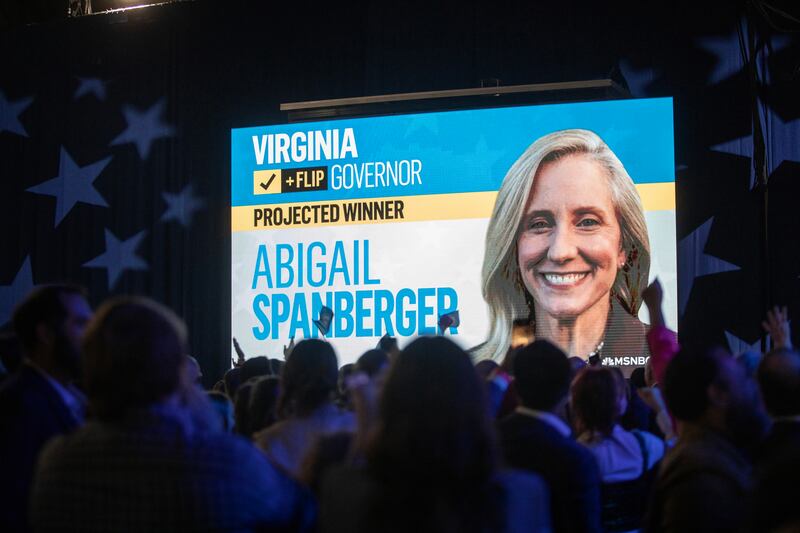
This comes on the heels of the November off-year elections, where Democratic gubernatorial candidates Abigail Spanberger in Virginia and Mikie Sherrill in New Jersey – both women with strong national security backgrounds elected to Congress in the last Democratic wave of 2018, during Trump’s first term – swept to victory with larger-than-expected margins. In the process, they recaptured some of the districts and constituencies where Trump made inroads in his race against Kamala Harris last year.
In New York, where a Democratic victory is usually expected, Democratic socialist Zohran Mamdani won handily.
Even more impressively, in more obscure but significant races, Democrats flipped two Republican seats on the state Public Service Commission, which regulates utilities, in purple Georgia, and retained three Pennsylvania Democratic supreme court seats targeted by Republicans with majorities of over 60 per cent.
READ MORE


The wave that swept Spanberger into office also added 13 seats to the Democratic majority in the Virginia House of Delegates, their largest caucus in nearly 40 years.
More recently, a Democrat won the Miami mayoralty for the first time in 30 years, and in a special election for an open Congressional seat in red Kentucky, the Democrat lost, as expected, but gained 13 points over the 2024 margin.
Most of the arguments Democrats have among themselves are about ideology and the best path to winning elections or dealing with the Trump administration. The 2025 elections have not resolved that for one view or the other, but they have highlighted two themes.
[ Trump is learning he can’t always get what he wants. But neither can IrelandOpens in new window ]
One is that if you campaign relentlessly on affordability issues – the kitchen table concerns that hurt Joe Biden and then Kamala Harris, and that are hacking away at Donald Trump’s approval ratings – you can overcome the usual onslaught of culture war attacks from Republicans.
Whether voters agree with most Democrats on rights for trans people or asylum protections, those issues take a back seat to economic concerns if voters feel the party hears them. Both of the new governors and mayor Mamdani, though different in other ways, made affordability the centrepiece of their campaigns.
The other theme is the regional diversity of the United States. A more centrist candidate perfect for Virginia – which has been trending blue but which has been led by a Republican governor since 2022 – might falter in New York City, one of the few places in the country where an avowed Democratic socialist could come out of nowhere to win.
There was a time just a few decades ago where Democrats were elected to the US Senate from the mountain west and southern states that have been mostly off-limits to their presidential candidates since Jimmy Carter won almost 50 years ago. Now the partisan composition of the Senate largely follows the presidential results, with an extremely narrow path for Democrats.
In this year’s election, to have any chance of taking back the Senate, they have to run the table and retain not only every seat they hold now – eminently possible, if not likely, even with a few incumbent retirements – but take four seats now held by Republicans, starting with the most vulnerable, Susan Collins, now the only member of her party holding a Senate seat in a state consistently won by Democratic presidential candidates. She’s managed to hold on because she’s what passes for a “moderate” Republican in the current era, showing a few flashes of resistance to Trump, but her luck may be running out as US elections are increasingly nationalised and voters recognise that returning Collins to the Senate means keeping control of the chamber in the hands of a party that has largely surrendered its conscience and its spine to Trump.
While the Republican Party is in thrall to the Maga movement, which seems certain to outlast Trump’s presidency despite signs of a growing fissure between economic populists, culture warriors and conspiracy theorists, there’s no denying that the Democratic “big tent” has shrunk a bit in recent years. There appear to be few dissenters to the party’s support for abortion rights and same-sex marriage, and its economic consensus has moved a few notches to the left.
Biden, long known as a party centrist, felt the shift among party activists and acted accordingly. However history may judge his tenure, Biden ushered in more robust progressive measures than any president since Lyndon Johnson in the 1960s. By the time he was forced by age and infirmity to leave the presidential race, his strongest base of support included Alexandria Ocasio-Cortez and Bernie Sanders, icons of the party’s left.

Funny that, since in 2020 Ocasio-Cortez observed that “in any other country, Joe Biden and I would not be in the same party.” But the US has not had a true multiparty system since the middle of the 19th century, and its bipolar approach for many decades accommodated a broad range of ideologies within each party.
Now the Democratic “brand” is at a low point throughout the south and west, and in some parts of the midwest, and its path back to Congressional power, at least in the Senate, may involve at least some candidates who don’t even call themselves Democrats. In 2024, a Nebraska candidate, a former union leader named Dan Osborn, made a strong showing as an Independent challenging Republican incumbent Deb Fischer. Hoping that Osborn would caucus with their party as two other Independent senators, Bernie Sanders and Angus King do, the Democrats declined to run a candidate on their party line.
Osborn is running again in 2026 for a seat opened up by the retirement of Nebraska’s other Republican Senator, Joni Ernst.
What might all this mean for the 2028 presidential race?
For a party whose obituaries are regularly written, the Democrats now hold about as much power at the state level as Republicans do, after finally paying serious attention to statehouses. While the 2028 field will likely include former Biden administration officials like Kamala Harris and Pete Buttigieg, and undoubtedly a few senators, the most promising crop of candidates comes from the ranks of Democratic governors.
Josh Shapiro of Pennsylvania and Gretchen Whitmer of Michigan have been popular, effective governors of their critical swing states. Gavin Newsom of California and JB Pritzker of Illinois have pushed progressive legislation with the aid of their lopsided Democratic majorities, and served as visible, often caustic foils to Trump. Andy Beshear of Kentucky is attracting attention as a young, centrist governor twice elected in one of the country’s reddest states, and the charismatic Wes Moore of Maryland has drawn comparisons to Barack Obama. In a few years, such a list could include Spanberger and Sherrill as well. It’s a very strong bench.
In the last 50 years, excepting Joe Biden and the exceptional Barack Obama, a path-breaker who no one saw as a Washington insider, the Democrats have had electoral success with younger Southern governors like Jimmy Carter and Bill Clinton. In the light of history, the Biden administration will be viewed much more favourably than it is at the moment – and perhaps the wreckage wrought by Trump will accelerate that moment – but right now it’s hard to imagine Democratic primary voters will want to send into battle a candidate who has the burden of defending the past.
Gara LaMarche is the previous president and chief executive of both The Atlantic Philanthropies and the Democracy Alliance
[ Trump and CEOs: speaking up, or just playing it safe?Opens in new window ]