Almost three weeks into the war against Iran, Donald Trump has new antagonists – from within his Maga camp.
Since the US president ordered the first US air strikes against Iran in February, his political base has been torn between influential figures who balk at foreign interventions and more traditional foreign-policy hawks looking to crush the regime in Tehran.
These divisions spilled out into the open on Tuesday when Joe Kent, the director of the National Counterterrorism Center, resigned with a scathing letter to the president, saying Iran “posed no imminent threat” to the US and the war was launched under “pressure” from Israel.
Hours later, Trump said it was a “good thing that [Kent] is out because he said Iran was not a threat”, while White House press secretary Karoline Leavitt blasted the former counterterrorism chief for what she described as “many false claims” in his resignation letter.
READ MORE


But the president may struggle to contain the damage. Since the war began, he has confronted resistance from some of the loudest voices on the right, including former Fox News host Tucker Carlson, Megyn Kelly, another former Fox News personality, and Joe Rogan, the podcaster who played a critical role in helping Trump reach voters in the 2024 election.
On Tuesday, Marjorie Taylor Greene, the former Georgia congresswoman and Trump ally turned critic who is opposed to the war against Iran, rushed to Kent’s defence.
She wrote on X: “Joe Kent is a GREAT AMERICAN HERO. God bless him and protect him!”
“When the president was campaigning, he was very happy to have a diverse political coalition,” said Justin Logan, director of defence and foreign policy studies at the Cato Institute. “[But] if you throw the car keys over to one faction of that coalition, necessarily other factions may be displeased.”

Signs of unease are also found inside the administration. Trump last week said JD Vance, his vice-president who has long been opposed to foreign military interventions, was “philosophically a little different from me”, although in recent days, Vance has sought to show his support for the war.
“I trust president Trump to get the job done, to do a good job for the American people and to make sure that the mistakes of the past aren’t repeated,” Vance said on Monday.
Kent’s resignation came the day before top intelligence officials including Tulsi Gabbard, director of national intelligence, are set to be grilled by lawmakers in back-to-back congressional hearings.
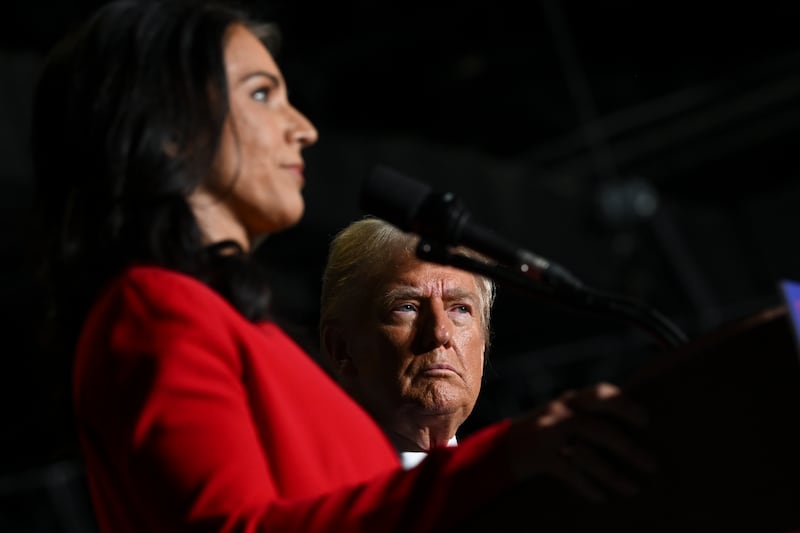
Gabbard was Kent’s closest ally within the administration. The former Democratic member of US Congress has also been a fierce critic of foreign interventions, including warning Trump against getting embroiled in a “very stupid” and “costly” war with Iran in 2019. She has hired a number of senior officials – including Kent – who share her scepticism of past US military quagmires.
Gabbard commented publicly on the war for the first time on Tuesday but avoided saying whether she supported Trump’s decision to strike Iran.
“After carefully reviewing all the information before him, President Trump concluded that the terrorist Islamist regime in Iran posed an imminent threat and he took action based on that conclusion,” she wrote in a post on X.
Meanwhile, Trump’s supporters have taken to social media to defend the president. Laura Loomer, the right-wing influencer close to the White House who supports the war, attacked Kent for being “a serial leaker and a narcissist who is obsessed with blaming Jews and Israel for everything”.
But on the influential Charlie Kirk Show podcast, named after the right-wing conservative activist who was assassinated last September, Andrew Kolvet, one of the hosts, said he had “mixed feelings” about Kent’s resignation.
“I am not 100 per cent always rah rah in favour of regime change, nor was Charlie. As a matter of fact, we warned against it. We want peace. But when the decision was made by president Trump to go ... we are then in support of our troops ... we’re in support of success in this war, and we want it to be a good thing for the world,” he said.
Kent’s resignation also reverberated across Capitol Hill, forcing Mike Johnson, the Republican Speaker of the House, to defend Trump’s rationale for the conflict.
“I’m on the gang of eight,” Johnson said, referring to the group of lawmakers who are informed on sensitive national security matters. “I got all of the briefings. We all understood: there was clearly an imminent threat that Iran was very close to the enrichment of nuclear capability, and they were building missiles at a pace that no one in the region could keep up with. I don’t know where Joe Kent is getting his information, but he wasn’t in those briefings, clearly.”
A Quinnipiac University poll conducted earlier this month showed 85 per cent of Republicans supported military action against Iran. A YouGov-Economist poll found 91 per cent of self-identified Maga voters supported the war, echoing an NBC News poll earlier this month in which 90 per cent of Maga voters backed the strikes, with just 5 per cent saying they should not have been launched.
[ Japan’s leader faces test of nerve with Donald Trump: can she say ‘no’?Opens in new window ]
Still, Republicans are concerned that those approval numbers could wane in a critical midterm election year, especially if the military and civilian casualties mount and the war continues to hit the global economy.
Iran’s grip on the Strait of Hormuz, through which 20 per cent of the world’s oil passes, has sent crude prices soaring and petrol prices in the US have reached record levels not previously seen during Trump’s first or second term in office.

“This is not a cruise that a lot of folks signed up for,” said Charlie Cook, the veteran political analyst, referring to Americans who voted for Trump in 2024.
“These people voted to throw out Biden and Harris. But attacking Iran, Venezuela, attacking vaccines, bulldozing the East Wing? You could put together a long list of things that really weren’t on their priority list.” – Copyright The Financial Times Limited 2026