
Toy fads are definitely getting shorter. There was a time when a must have thing would get at least a year or two in the sun with many lasting a decade or more before fading into – if not oblivion – irrelevance.
But it was perhaps telling that on the Late Late Toy Show just past there was just one mention of Labubus and – unless our memory is playing tricks on us – that mention wasn’t even to highlight a toy that the children of Ireland might find under the tree this Christmas Day.
And it is not just the producers of the perennially popular television programme who have decided that the weird elf like creatures with their plush bodies and plastic faces sold by the Chinese company Pop Mart might be yesterday’s toy.
A couple of weeks back the very serious minded business website Bloomberg suggested the “golden era of Pop Mart shares may already be over.
READ MORE


The company’s Hong Kong-listed stock has dropped more than 30 per cent from its high in August, with some of the losses taking place after an employee was heard questioning the price of one of its blind-box products during a live-streaming event. The pullback has come after a rally that saw shares surge more than 1,500 per cent from the start of last year to their August high.
It also quoted Melinda Hu, a senior research analyst for Asia consumer stocks at Bernstein in Hong Kong, as saying “the scarcity, the hunt, the dopamine hit and the secondary market” fuelling Labubu’s popularity resembles the speculative cycle of Beanie Babies. “I wouldn’t advise long-term investors to add the shares without fundamental changes in the company’s strategy.”
The likes of Rihanna, Dua Lipa, Kim Kardashian and Blackpink’s Lisa, all of whom have been spotted with the little devils might do well to sell them now while many of the vape and mobile phone shops and street hawkers around Ireland and the world who have been flogging some potentially not entirely legit knock-offs might end up with boxes of the things they can’t shift.
While this page is not in the business of buying and selling shares or indeed Labubu’s, Hu’s mention of beanie babies did cause us to recall some of the finer fads that have filled children’s Christmas’s past with such joy while simultaneously adding mountains of stress into the lives of their parents.
Here are just some of them.
Raggedy Ann Dolls
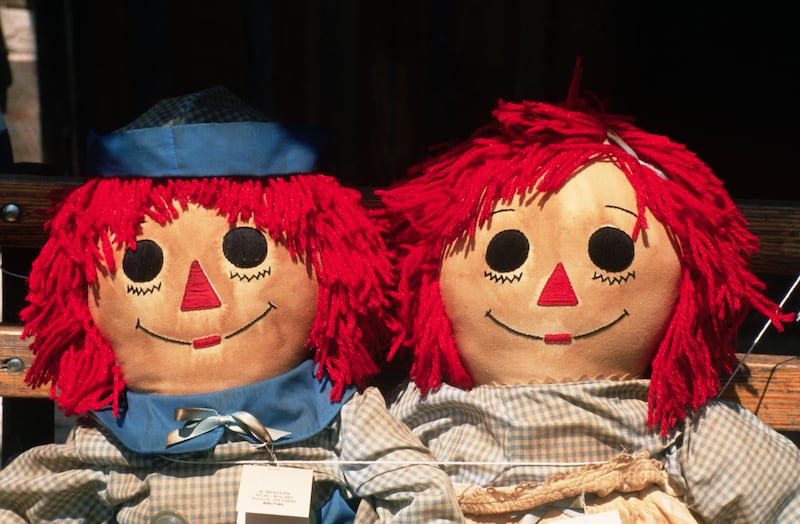
No, Pricewatch is NOT old enough to remember the first real Christmas toy fad of modern times and we are not entirely sure the fad made it as far as Ireland or even if it did would a fairly poor country in the middle of the War of Independence had much time for such frippery.
A man with the pleasingly Dickensian name Johnny Gruelle created the cloth dolls in 1915 but they only took off in the US in 1920, when Ann was joined on the market by her brother Andy. And boy did they take off. More than 60 million dolls have been sold and 40 books published since the craze started and while it is no-where near as popular as it once were, it is still on the market, showing a longevity that the Labubu could only dream of.
The Yo Yo Fast forward to the 1929 when a Filipino immigrant to the US called Pedro Flores opened a yo yo factory – the words yo yo meant “come come” in his native tongue. We’re not sure how popular the toy on the string would have been had it been called “come come” – although who knows, it might well have been even more sought after.
Sadly Flores did not see his invention turn into an endless stream of money and he sold it to Donald Duncan in 1930. It almost immediately took off and within a couple of years millions of children all over the world were trying – and mostly failing – to do cool tricks with them infuriating devices. In the 60s, Duncan’s yo yo business went down and did not bounce up. He filed for bankruptcy although the yo yo is still going (or coming?) strong.
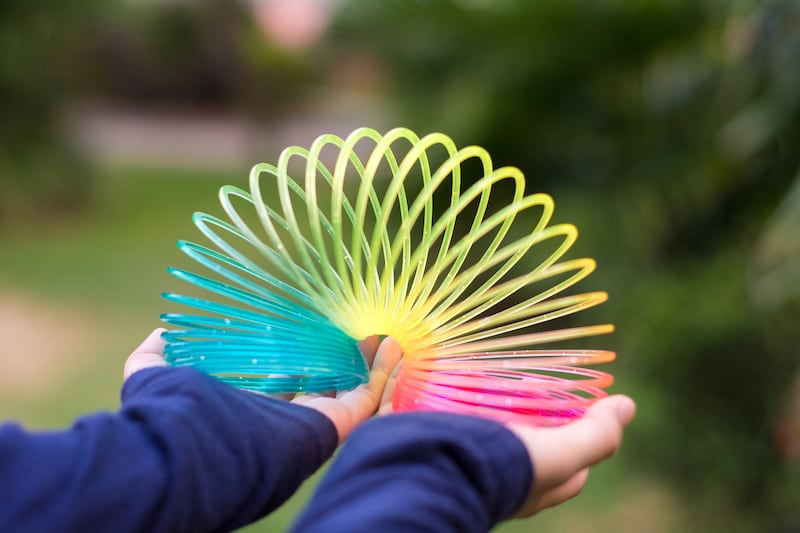
The Slinky
The slinky was invented in 1941 by a naval engineer called Richard James who was actually looking for some class of spring to make the equipment on his ship steadier in choppy seas. We’re not sure if it was any good at that but he saw it’s potential as a toy and his wife Betty gave it its name. It made its toy debut in 1945 in Gimbel’s in Philadelphia quickly selling out.
It then became a wild craze with millions of them selling by the late 1940s and they can still be found in toy shops and party bags everywhere.
Pet rocks
This must surely be the dumbest toy fad in human history – although having said that we must salute US advertising executive Gary Dahl for coming up with the wheeze in the mid-1970s.
And what was the wheeze? Well, he released pet rocks into the wild - or at least onto toy shop shelves. They had some advantages over actual pets in that they never needed to be walked, fed or groomed and they would never pee on your floors.
The hard to miss disadvantage, of course, was that they were just stones collected from a local beach. He managed to sell these free rocks for $3.95 (€3.40) each. People went mad for them – possibly quite literally. Millions flew off the shelves in 1975 and made their inventor a multimillionaire in six months.
Atari
In the 1970s, Nolan Bushnell had a dream of creating an electronic game that could be played on family televisions. And he set about making it a reality. By 1979, the Atari game’s console and the hilariously basic by today’s standards Pong had taken off, becoming the best selling Christmas toy in the US.
Even Pricewatch had an Atari in the early 1980s.
The Rubik’s Cube

This fiendishly clever colour coded cube with more than a billion possible combinations was invented by 29-year-old Erno Rubik in 1974 but its early years were fairly quiet.
The rights were bought by the Ideal Toy Company which hawked it at international toy fairs in 1980 after which is took off selling more than 200 million in the first three years. There were even books on how to solve it but the irritatingly smug people who were able to solve it in less than a minute did not need it.
For the sake of full disclosure, Pricewatch was not one of those people and despite spending many, many, many hours on it, we never got close to solving the puzzle – at least until we realised it could easily be broken into bits and reassembled in the right way but that is probably not what Erno would have wanted.
While its wild popularity dipped fairly quickly it is still on the market and YouTube is awash with videos of people who can solve multiple cubes simultaneously while blindfolded. We hate these people.
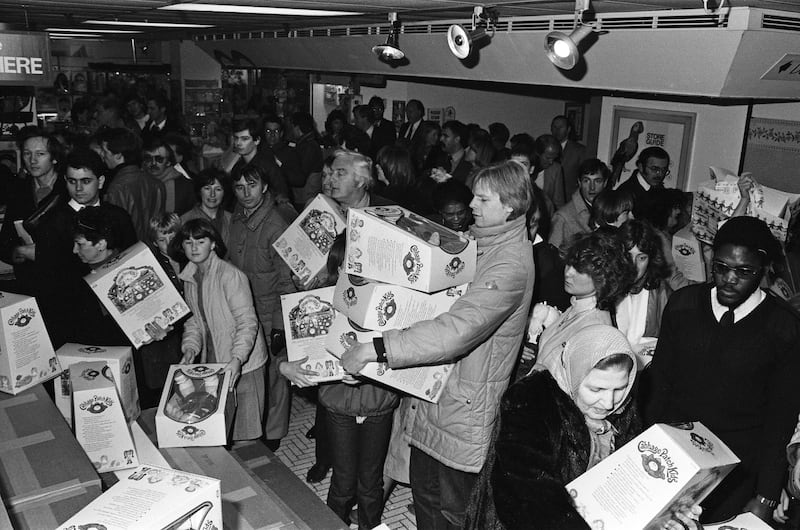
Cabbage Patch Dolls
Xavier Roberts probably spent a portion of the early 1980s wondering to himself how he could possibly bring a new doll onto the toy market given that it had been saturated with the things since the glory days of Raggedy Ann. Then he came up with a billion dollar idea – the kind of cheap and simple idea that anyone could have come up with but didn’t. And what was that idea? He gave his Cabbage Patch Dolls was the “adoption certificate”.
His thinking was that if children were allowed to adopt their dolls they’d feel a stronger emotional bond with them and he was right on the money. In the US alone in 1984 sales topped $1 billion and there were fist fights reported in toy shop aisles as frantic parents fought to get their hands on the cloth-eared dolls.
Trivial Pursuit
1984 was also the year that saw the arrival of a game that would take the world by storm and no doubt start all manner of post-Christmas fights. Like all the best games the idea was very simple and saw players gather round answer a series of questions covering things like sport, food, music and entertainment and then get into a sulk if they got them wrong – although that might have just been us.
The game was invented by Canadians Chris Haney and Scott Abbott and it quickly turned them into millionaires. They made a lot of their millions in the 80s before selling the game in 2008 for around $80 million to Hasbro in 2008. Given the enduring popularity of the game, it seems like it was a smart purchase by the toy maker.
Game Boy
If the Atari and Pong marked the birth of the computer game, the Game Boy was the great leap forward. In the intervening period, there had been games played on actual computers but as anyone who ever spent a year waiting for a Commodore 64 cassette game to load will recall, they were pretty rubbish.
Then in the late 1980s, computer engineers working for the Japanese company Nintendo developed a games console and it is not an exaggeration to say it changed the world. They didn’t call what they had a computer game – as people didn’t love that term and went with Entertainment System instead.
In 1985, the year it was released, around 50,000 units were sold but things were just getting started. In 1986 the Entertainment System Launched the Super Mario Bros game and people went wild for it.
In 1988, in the US alone, one out of every six dollars spent on toys went on consoles and Nintendo’s revenue came to $1.7 billion and while that is a lot of money now it was a whole lot more back then.
Beanie Babies
Stuffed toys that were sold as collectables with some of them proving incredibly hard to find which only added to their appeal. An actual Beanie Baby bubble developed with some people willing to spend as much as €5,000 on what was – when all is said and done – a stuffed toy.
The bubble burst and you’d do well to get a fiver for one.

Tickle Me Elmo
While a huge amount of money has been spent on computer games since the birth of the Nintendo with the spending only increasing with the arrival of tablets and app stores and the like, toys fought back and rarely with as much effect than a furry little creature from Sesame Street.
The USP of the Tickle Me Elmo was that you could tickle him and if you successfully stimulated certain spots around his body – his tummy mainly - you could bring him great joy, a joy he manifested by laughing.
Tickle me Elmos actually started out as Tickles the Chimp but that didn’t fly so a deal was struck with the Sesame Street foll.
It started selling in 1996 and appeared on the Rosie O’Donnell show. She famously gave one to everyone in the audience. They were – it turns out – the lucky ones. The dolls sold out of mainstream stores so quickly that folk took to the still very young world wide web to find them with some people prepared to bid in excess of $1,000 in online auctions to get them hands on them.
Tamagotchis
These are probably the oddest faddy toy of all time. They were digital “pets” that you had to keep alive by pushing their buttons repeatedly throughout the day.
Unlike the Pet Rock of a previous decade, Tamagotchis came with considerable jeopardy and if you didn’t treat them right they would “die”. These fells stayed on the market for a couple of years before – effectively – dying en masse as people found other buttons the preferred pushing.
Furbies
Fast forward two years and the world had moved on – mostly – from the ticklish muppet and the Tamogochi and all the attention was focused on weird furry creatures that could learn and talk. The 5-inch talking robot sold like crazy and during its first Christmas window around 2 million Furbies were sold rising to 20 million a year later.
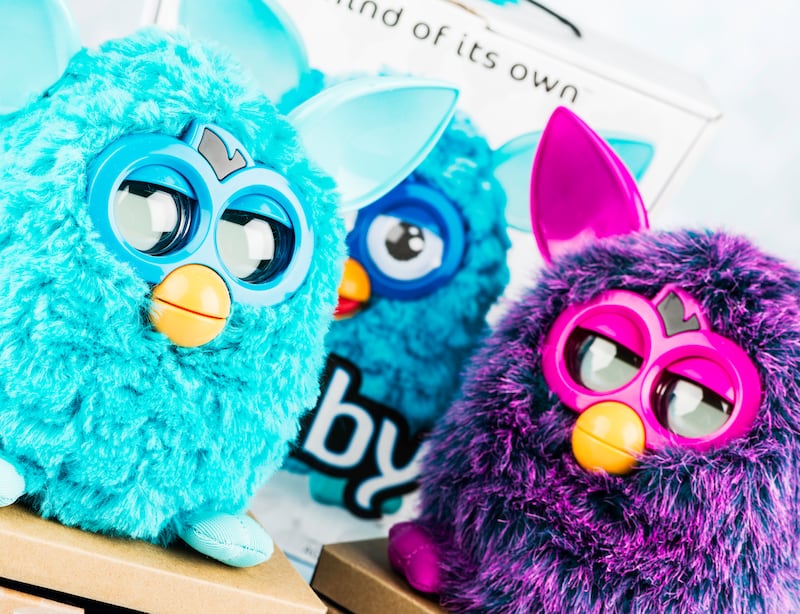
There was even chatter that the American intelligence agencies were concerned that they could be used as listening devices and relay private conversations back to third parties using the so-called Furbish language.
People were very concerned about that. Nowadays everything from our phones and tellies to our fridges and vacuum cleaners are listening to every word we say and sending it back to marketing executives working for big tech and we don’t seem to mind a jot. That’s progress folks.
Rainbow Looms
Parents of children of a certain age will remember loom bands with fondness or exasperation. They were first invented in the latter half of the noughties by a Malaysian crash test engineer called Cheong Choon Ng who was based in the US.
He worked out a system to easily make elastic friendship bracelets – although he did not use that term – as a means to occupy his young child and her friends. Within three years children all over the world were making the most elaborate loom bands you could possibly imagine. But then the world got tired of them and moved on.
[ Tech toys: What’s on Santa’s list this Christmas?Opens in new window ]
Elsa Dolls
Frozen was released in 2013 and by Christmas 2014 Elsa dolls that could sing a couple of lines from the film’s biggest song had become the most sought after doll of the season. Trying to find them was a nightmare and there will no doubt many parents still suffering the PTSD from the experience. It might be time to let it go now.
Fidget Spinners
These came out of nowhere in 2016 - or at least they sort of did. The initial idea was they hand held devices could be used to aid people with autism, ADHD and anxiety but they were quickly adopted by the more mainstream market and in the run-up to Christmas 2016 Forbes magazine described them as the “must-have office toy for 2017”.
Videos of people doing cool things with them quickly went viral and hawkers on Moore Street in Dublin were selling them by the truckload as shops struggled to keep supplies on their shelves.
They can still be bought but they are not on every street corner and don’t have quite the same universal appeal as they once did.