Main points
- The budget package will bring public spending to €125.6 billion next year
- Ifac has strongly criticised the budget, warning it puts the public finances on “a worse trajectory”
- Budget struck a ‘balance’, McEntee says in response to Ifac criticism
- Taoiseach Micheál Martin defended the budget, saying: “We’re trying to protect people as best we can in the midst of an international crisis“
Key reads
- Budget 2027 main points
- Opinion: It takes a giveaway budget of €8.5bn to not annoy anyone – except Patrick O’Donovan
- Budget calculator: How this year’s measures will affect your income
- Budget Q&A: Our experts answer your questions
- Ireland’s new personal investment accounts: Here’s how the scheme will work
Screen Producers Ireland ‘significantly concerned’ by budget
Budget 2027 will create a “very challenging environment” for the Irish film and television industry, screen producers have warned, after the Government cut RTÉ’s funding and decided against increasing TG4’s and Screen Ireland’s allocations, Ian Curran reports.
The Coalition also opted against reintroducing an enhanced tax incentive for regional film and TV production companies, which Minister for Culture Patrick O’Donovan said he would like to revisit after last year’s budget.
We reported on the reaction of RTÉ and TG4 to the budget earlier, but industry group Screen Producers Ireland has since commented.
Susan Kirby, chief executive of the group, said the sector is “significantly concerned” about the budget.
She said the lack of an uplift to TG4’s and Screen Ireland’s funding amounts to “effective reductions” when expected inflation is taken into account.
“We would be extremely concerned that the reduction in funding would be most acutely felt by the independent production sector,” Kirby said of the decision to reduce RTÉ’s funding relative to what was promised in the 2024 agreement.
“This is the creative sector that RTÉ has identified as key to its reform plans under the New Direction Strategy, but the [Independent Production Unit] budget is the easiest non-fixed element of the budget to reduce.”
Minister rules out raising cap on Help-to-Buy scheme
There will be no increase in the €500,000 cap on the Help-to-Buy scheme for first-time buyers, despite data indicating many new builds in Dublin are selling well above that price, Ronan McGreevy reports.
The amount first-time buyers can avail of to purchase their first home was increased in this year’s budget by €5,000, meaning they can now avail of a refund on taxes paid over the previous four years up to €35,000.
The scheme is only available for new-builds up to a limit of €500,000.
Speaking at a budget briefing today, Minister for Housing James Browne ruled out increasing the €500,000 threshold on the basis it could add to house price inflation.
Read the full report here.
Nature groups criticise lack of budget funding
A dedicated Government fund to save Ireland’s nature will be announced soon, Minister of State Christopher O’Sullivan has said, Climate and Science Correspondent Caroline O’Doherty reports.
Confirmation of plans for the new Nature Restoration Fund came as it emerged that nature received hardly any additional funding in this week’s budget.
That is despite experts saying nature restoration needed new, dedicated funding of up to €700 million annually.
The budget allocated just €6 million extra to the National Parks and Wildlife Service (NPWS), the main agency tasked with overseeing nature restoration, bringing its overall budget to €113 million.
The Environmental Pillar, a network of 32 environmental NGOs, said that extra allocation equated to a “standstill” when inflation was taken into account.
“Government is clearly not listening to the needs of the country when it comes to investing in our critical nature infrastructure, which is buckling under a multitude of pressures,” said Oonagh Duggan of pillar member BirdWatch Ireland.
“At a time of most need to restore nature, Government has no message, no funding”.
Read the full article here.
In case you missed it, our finance experts Dominic Coyle, Beryl Power and Ruth Gilligan answered readers’ budget questions earlier today.
The Q+A covered income tax, inheritance tax and childcare among other topics. Catch up on all the answers here.
Culture card for teens might happen in future, says O’Donovan
O’Donovan did not confirm whether a pre-paid €100 culture card for 16-year-olds would be rolled out before the end of next year, as he had suggested before the budget - but which was latterly ruled out by Chambers.
But he stuck by the concept, Jack Horgan-Hones reports.
“If we want children to come off of their phones … it’s a very small sum of money for 16 and 17-year-olds, government has to put to be prepared to put their hands in their pocket to do that,” he said.
“The concept of the culture card is not in any way going to stopped ... There obviously will be things we would have loved to have done this year but we’ll get around to doing them next year and the year after.”
He said he would not make progress on Programme for Government commitments if he accepted every “hump and bump in the road” as the end of a proposal.
Culture Minister says it’s his job to ‘step on toes’

Minister for Culture Patrick O’Donovan has said it is his job “step on toes” to stand up for the sectors he is responsible for during budget negotiations, Political Correspondent Jack Horgan-Hones writes.
Speaking at his post-budget press conference today, the Limerick County TD also confirmed there is no funding allocation yet made for major sporting events such as the NFL which the government may seek to host in the coming period - with funding only made available for contractually agreed events like the European football championship and the Ryder Cup.
After a budget process which reportedly saw tense and difficult discussions between O’Donovan and Minister for Public Expenditure Jack Chambers, the culture minister said:
“I have a job to do for the arts, culture, communications media and sports community in Ireland, given the seal of office that the President gave me to carry out my constitutional prerogatives, and if that means I have to step on toes to stand up for the people who I am the minister with responsibility for … that is my job. "
He said he had a “very good” relationship with Chambers and defended his budget allocation, but also suggested he was constrained in what he could allocate to RTÉ due to the sum that was agreed.
He rejected suggestions he had walked out of budget negotiations. “When a meeting ends, people naturally go about the rest of their lives,” he said, defending the budget he agreed as “very significant”.
McDonald says budget was ‘devoid of imagination and ambition’
Sinn Féin leader Mary Lou McDonald said Budget 2027 was the 11th from Fianna Fáil-Fine Gael and “I have listened to a different version of the same budget 11 times now”, Marie O’Halloran reports from the Dáil.
McDonald said the Coalition parties “always put those at the top first, the golden circles ahead of the ordinary workers and families of Ireland, the people who actually create the wealth”.
The Government has “billions and billions” with “record surpluses”, but she asked: “Is this the best they could do?”
She reiterated it was a “gone-before-you-get-it budget, devoid of imagination and ambition, so disconnected, the product of an inability to listen or to understand what workers and families are going through”.
“There is nothing here that says solutions. Instead, people got half measures, tinkering at the edges or nothing at all.”
She said two weeks ago the Tánaiste told people “help is on the way” but she asked what help, saying “there is no dedicated cost-of-living package” while more than 300,000 households could not pay their electricity bills.
“A million households are on the hook for further energy price hikes, and nothing to help them pay their bills. We asked the Ministers to provide the €400 energy credit. They could not find the money for it, they say, but they did find the money find for generous tax breaks for their pals in high places, the developers, landlords and bankers, all the usual suspects.”
She added: “There is no sign of a windfall tax to hit the bumper profits of the big energy companies, which squeeze every euro they can from their customers. They let them off scot-free and did not put a glove on them.”
Bakhurst rejects assertion that pace of RTÉ reform is too slow
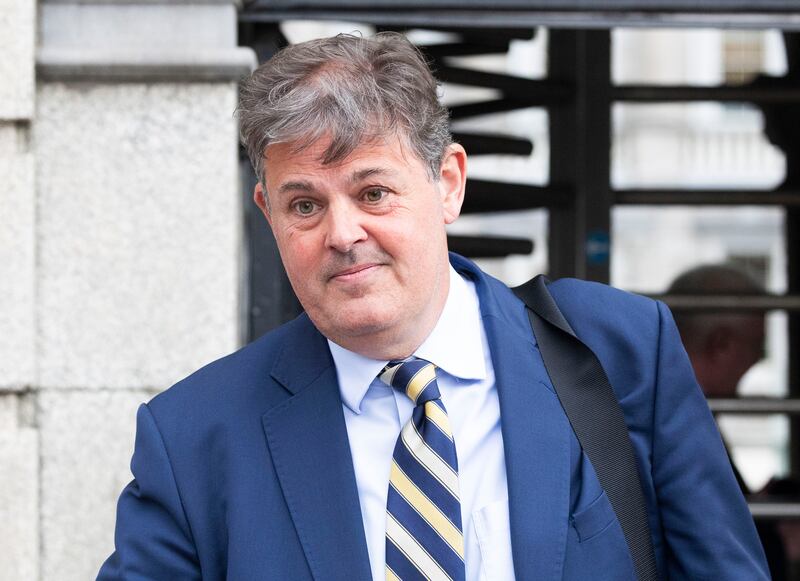
RTÉ director-general Kevin Bakhurst has rejected Minister for Communications Patrick O’Donovan’s assertion that the pace of reform at Montrose has been inadequate after the Government cut the national broadcaster’s funding in Budget 2027, business reporter Ian Curran writes.
RTÉ reached a landmark multi-year funding deal with the previous government in 2024. Under the agreement, the broadcaster would receive €725 million over three years: €225 million in 2025, €240 million in 2026, and €260 million in 2027.
However, O’Donovan announced today that RTÉ will receive €240 million next year, saying that he was not happy with the pace of change at the broadcaster and its transition to being a “more agile, smaller” organisation.
The decision appears to have been made at the last minute, catching the broadcaster off guard, according to Bakhurst. He told staff in an email on Wednesday that the he “completely rejects” the assertion that the pace of reform has been too slow.
Bakhurst said that the decision “is one we had not anticipated and will inevitably impact our ability to deliver our five-year strategy”.
Over the past two years, RTÉ has axed its in-house documentary unit, outsourced its religious affairs programming, and cancelled Upfront with Katie Hannon. It has also set out plans to outsource Fair City and The Late Late Show.
However, the Coalition has reportedly been disappointed by the pace of a job-shedding programme, through which RTÉ aimed to shed around 400 jobs.
“I think it is well documented that you know that there were issues with regard to the voluntary redundancy that could be achieved in the last round, and obviously we would hope that that would be able to be advanced,” O’Donovan said today.
Speaking at a press conference, the minister also said that his department had “very little scope, in relation to what resources we had available”.
Chair of Oireachtas media committee calls on O’Donovan to ‘urgently address’ RTÉ funding cut
The chairman of the Oireachtas media committee, Alan Kelly, has called on Patrick O’Donovan to explain and “urgently address” the Government’s decision to cut RTÉ’s agreed public funding for 2027 by €20 million.
“This is a very worrying development. Government agreed funding with RTÉ, yet has now cut €20 million at a point when the broadcaster has already made significant commitments. The Minister must explain why Government has changed course and what it expects RTÉ to sacrifice," he said.
Kelly said RTÉ director general Kevin Bakhurst has made clear the broadcaster did not anticipate the cut and that it will affect its ability to deliver its five-year strategy.
“Those consequences could reach viewers and listeners, RTÉ workers and independent producers who depend on commissioning decisions.
“A head-on collision between RTÉ and Government is now looming. The Minister must engage immediately, explain this decision publicly and honour the funding commitment. Government needs to resolve this urgently before audiences, workers and programme makers pay the price,” he said.
McEntee concedes Defence Forces unlikely to reach target in time
Minister for Defence Helen McEntee has conceded that the Defence Forces is unlikely to grow to the size targeted under a government investment plan.
Speaking at her post-budget press conference on Wednesday, McEntee said that while spending on defence would rise in line with the so-called “Level of Ambition 2” target under a defence reform plan agreed in recent years, serving numbers would lag behind.
Under the plan, the total size of the Defence Forces was due to hit 11,500.
While recruitment is “going in the right direction” she said to reach the 11,500 figure by the end of 2028 is “not likely, and it’s a very difficult task at this stage”.
The Meath East TD also confirmed that she would like Ireland to take part in Security Action for Europe (Safe) loan scheme run by the European Union.
“Yes I would like us to be part of SAFE, I’ve made that ambition very clear,” she said.
“It’s not just about accessing the funding, it’s about showing that commitment to European solidarity… to working with European colleagues and others… when it comes to our security,” she added.
McEntee also said there will be a “massive drop” in the number of Defence Forces personnel serving overseas once the Unifil mission in Lebanon winds down next year.
She said it would go down from around 400 to about 90, most of whom will be in office roles.
While she said there was a hope that Ireland could be part of an EU successor mission being discussed, she said it would not be possible until and unless the triple lock was reformed.
She suggested that fewer opportunities to serve overseas would make it harder to recruit new soldiers.
“If we do not have those opportunities for people, I believe it will have an impact on those who wish to join but also retaining people who are actually in the permanent defence forces.”
TG4 expresses “deep disappointment” over budget funding
TG4 has expressed “deep disappointment” at the level of funding it has received in Budget 2027, saying it falls “significantly short of what is required”.
TG4 received an additional €5.4 million in Budget 2026, bringing total funding to €65.4 million.
However, Deirdre Ní Choistín, árd stiúrthóir of TG4, said the decision not to increase funding for next year was “deeply disappointing”.
She said interest in the Irish language is “at a record high and demand for Irish-language content is stronger than ever”.
“TG4 is delivering growing audiences, significant public service value and economic, regional and Gaeltacht impact, while supporting the independent production sector across the country. Our funding should reflect the scale and ambition of that remit.
“This decision will inevitably have consequences for what TG4 can deliver in 2027. We will now assess the impact on our plans and strategic priorities for the year ahead,” she said in a statement issued on Wednesday afternoon.
In the statement, TG4 also said it remains concerned that, “unlike many European public service media providers”, it continues to operate without a multi-annual funding settlement.
“Reliance on annual budget decisions limits long-term planning and investment and creates uncertainty for the Irish independent production sector, much of which is made up of SMEs.
“Ireland already ranks among the lowest funders of public service media in Europe. European Broadcasting Union research shows Ireland invests just 0.08 per cent of GDP in public service media, compared with an EU average of 0.14 per cent.
“The funding outcome is particularly disappointing given TG4’s very strong performance in 2025,” it said.
The broadcaster recorded its fifth consecutive year of audience growth and its highest audience share since 2009, generated €92.8 million in economic output and supported up to 1,460 jobs across Ireland, it said.
It added that public support for TG4 was “exceptionally strong”, saying 91 per cent of people agreed TG4 has a “clear need and role in Ireland today” in a poll last November by Ipsos B&A.
Education Minister makes ‘no apologies’ for extra money needed last year
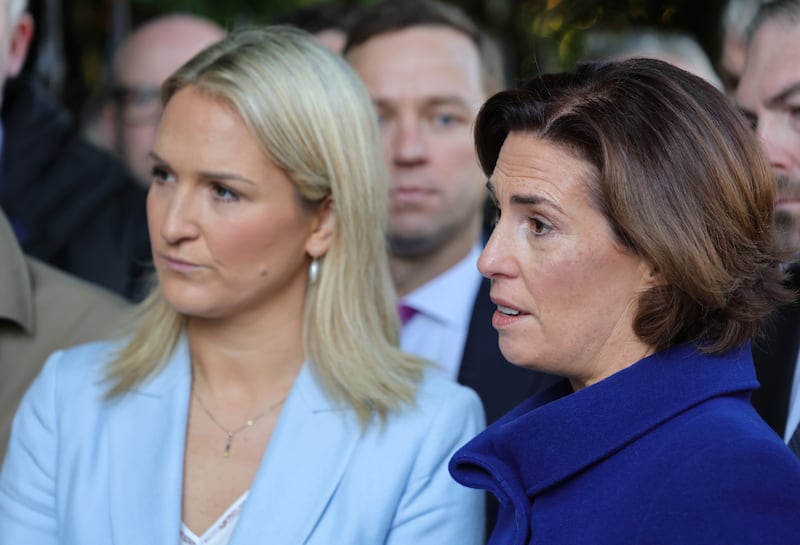
Minister for Education Hildegarde Naughton has said she makes “absolutely no apologies” for the additional €646 million funding her Department required last year, as she announced details of the record Education budget for 2027.
Education Correspondent Niamh Towey reports:
The Department of Education was allocated €14.4 billion in total for 2027, an increase of €712 million on last year when the supplement is included.
At a post-budget press briefing on Wednesday Naughton was asked if she would apologise to her ministerial colleagues for the levy imposed on other departments to cover this supplementary funding.
“I make absolutely no apologies for fighting for €646 million earlier this year,” Naughton said, adding her Department was “underfunded” last year and that her “priority was to reset the base”.
“I am confident that the base has been reset, but I’m also conscious that we are a demand-led department,” she said, meaning they did not have control over school numbers.
One issue the department would be seeking cost savings on was the school transport scheme, examining whether existing local bus services could be used for school transport places.
On the issue of pending school closures due to teacher strikes, the Minister urged teachers’ unions to go into negotiations with the Government on a new public sector pay deal.
“Nobody wants to see disruption. Teachers, parents, nobody wants to see closures, so I’d encourage everyone to sit around the table to try and come to some deal as soon as possible,” Naughton said.
Almost all primary and secondary schools are due to close on October 14th and 21st as unions escalate their dispute over a new national pay deal.
RTÉ ‘completely’ rejects assertion that pace of reform has been slow

RTÉ has said it has “some important decisions to make” if the funding agreement it had with the Government “will no longer be honoured”, Political Editor Pat Leahy reports.
The broadcaster was reacting to the news that it would receive €20 million less next year than it had expected under an agreement made with the Government in 2024.
It had been due to receive €260 million, but will now get €240 million following yesterday’s budget.
In a statement, RTÉ director general Kevin Bakhurst said:
“We completely reject the assertion that the pace of reform and transformation within RTÉ has been slow … We have also already managed to exit almost 100 people from the organisation, despite the late approval of the Voluntary Exit Programme and a short window to enable people to leave.
“The Government’s decision to reduce this public funding agreement by €20 million at this late stage, when we have already made important commitments to our audiences, to the independent sector, to other important stakeholders and to RTÉ staff, is one we had not anticipated and will inevitably impact on our ability to deliver our five-year strategy.
“If the three-year multi-annual agreement will no longer be honoured – we now have some important decisions to make.”
RTÉ said the chair of its board, Terence O’Rourke, is seeking a meeting with Patrick O’Donovan regarding the multi-annual commitment made in 2024, “particularly given that RTÉ has committed to numerous agreements with its stakeholders based on this written and extensively publicised agreement”.
Resilience of Ireland’s economy an ‘astonishing accomplishment’, Tánaiste tells Dáil
The remarkable resilience of Ireland’s economy is an “astonishing accomplishment” given “where we have been in last two decades”, Tánaiste Simon Harris has told the Dáil.
Marie O’Halloran reports:
In his Budget 2027 speech he said from the financial crisis, Brexit, the pandemic and the wars in Ukraine and the Middle East “we have rebuilt our economy and restored our public finances”.
Forecasting an additional 53,000 jobs next year, he said “countries do not find themselves in such a strong position by accident.”
“It is because, over successive Governments and across many years, we have got the big decisions right,” he said.
This year a surplus of €6.7 billion is expected, rising to €9.5 billion next year.
The Minister for Finance said “if we had listened to those who urged us to always spend more and tax less, we would not have had the resources” to respond to challenges and “protect our people and our economy”.
He insisted it “is precisely because we managed our public finances responsibly that we have been able to react with flexibility and speed to the latest shock” of the war in the Middle East.
He said over this and future budgets he wanted to change things to support people “in the middle” who “sometimes feel as if they are asked to shoulder too much of the burden”.
Harris added: “I have made clear that this Budget must reward work and support the people who keep our economy running,” and that was why he had announced an income tax package of €1.3 billion.
Budget ‘rewards work and effort’, Taoiseach tells Dáil
In the Dáil, Taoiseach Micheál Martin has said the “positive state” of public finances led to the transfer an additional €1 billion to the Future Ireland Fund, Parliamentary Correspondent Marie O’Halloran reports.
Martin said the additional €1 billion brings the total contributions to the long-term State saving fund to some €6.8 billion next year, on top of the €23 billion that has already been transferred.
“This shows this Government’s commitment to reinforcing our economic resilience,” he said.
The Taoiseach also insisted the Government is not backtracking “on our commitment to decarbonising our society”.
He said to build a greener and more sustainable economy “this transition has to be managed in a fair and balanced way”.
The Government had invested €1.5 billion into ESB “to boost capacity and our renewable energy infrastructure”.
“And it is why we will transfer €2 billion to EirGrid over the coming years to invest in the resilience of our energy grid," he said.
The energy transition is a “long-term project, but we can take action today to accelerate it”, he said.
Martin said the budget “is about helping with the here and now, while planning for the road ahead”.
He said it was a budget that supports households and businesses to reduce exposure to future energy shocks.
The budget is one “that rewards work and effort and lets people keep a bit more of their own money,” that is “being delivered at a deeply uncertain time” though the State is “well placed to face the challenges ahead”.
“Our public finances are in good shape. We are one of the few countries in Europe running surpluses,” he said.
This budget sets out “an ambitious, optimistic, but realistic path forward, built around rewarding hard work, risk taking and innovation”.
RTÉ could receive reduced funding after concerns over pace of reform
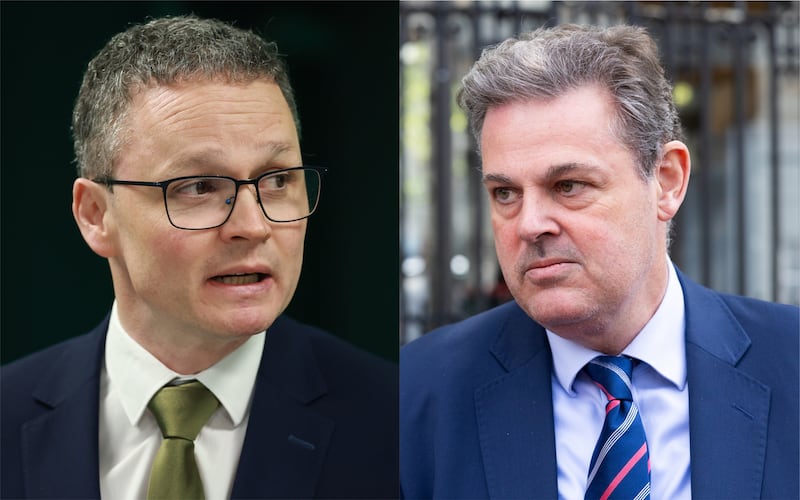
RTÉ could be left with a substantial shortfall in State funding next year with a reduced allocation from Patrick O’Donovan’s Department of Culture, Communications and Sport, Political Editor Pat Leahy reports.
Under a funding settlement agreed by the Minister in the previous government, Catherine Martin, RTÉ was due to receive €260 million from the exchequer next year.
However, although the figure is not broken out in the budget documentation published yesterday, it is understood that the figure allocated to RTÉ will be €240 million.
RTÉ funding was to be contingent on the reduction of employee numbers at the station and other reforms.
However, O’Donovan has previously raised questions about the pace of reform.
The issue is expected to be raised at the Minister’s post-budget press conference this afternoon, at which he is also likely to be asked about the €100 “culture card”, flagged before the budget but conspicuously missing yesterday.
RTÉ said it would issue a statement after it heard from O’Donovan this afternoon.
Consequences of Middle East war to ‘reverberate for some time’ - Taoiseach
Taoiseach Micheál Martin has started off a Budget 2027 debate of more than seven hours in the Dáil today, Marie O’Halloran reports.
Opening his 30-minute address to a virtually empty chamber he reiterated his pledge that “there will be no increase in any form of tax at the pump or in your home, during this winter”.
He said after seven months of conflict in the Middle East, “even if the conflict were to end tomorrow, the consequences for energy markets would reverberate for some time to come”.
That was the reason they will extend the reduction in excise duties on fuel until end-February, “followed by a gradual restoration to pre-conflict levels”.
He said it was a “substantial commitment” from Government but because of “strong fiscal buffers it is a cost we can absorb”.
“Restoring rates in a gradual and phased manner means families will not face a sudden ‘cliff-edge’ in costs during the winter months, and that businesses can plan appropriately.”
‘A KitKat budget from a TikTok Tánaiste’ - Bacik
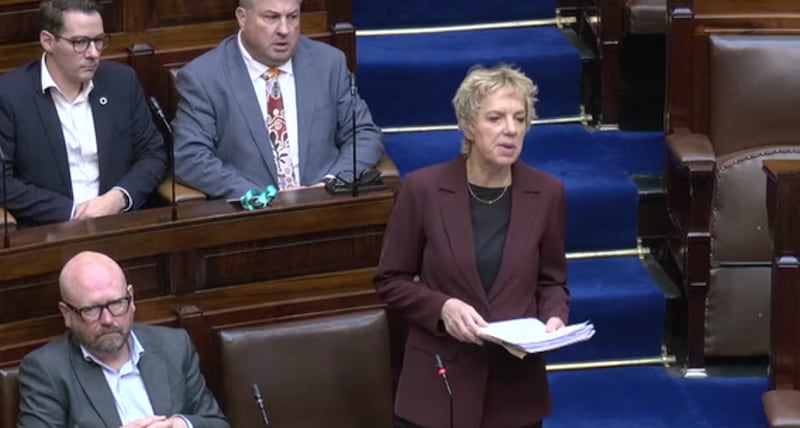
Labour leader Ivana Bacik has described Budget 2027 as “pathetic” and “underwhelming”, saying the money the Government stressed “will go back into people’s pockets, could barely buy a chocolate bar a week”, Marie O’Halloran reports.
It was a “sort of KitKat budget from a TikTok Tánaiste”, Bacik said in the Dáil.
“In seeking to please everybody, you’ve ended up pleasing nobody,” she said.
“This underwhelming budget has failed so many - the PAYE workers you forgot last year, the public sector workers still left without any pay deal, the commuters facing a 15 per cent increase in public transport fares, renters facing eviction into homelessness”.
The Dublin Bay South TD cited a worker, Martina, who asked how the Government could think €4 a week would help her, “a worker who earns €33,500 per annum, who gets up to work?”.
“For people like Martina, you haven’t made it any cheaper to heat her home or any cheaper to commute to work or to school.
“You’ve put a pittance on the budget for SEAI retrofits and taken only €43 off the €1,500 cost of a home heating oil refill.
“The freezing of funding for active travel means that, in real terms, you’ve slashed budgets for walking and cycling measures,” she said.
Bacik questioned the “more than €200 million on capital gains tax cuts for the wealthiest when hundreds of thousands are in arrears on energy bills”, and asked why no windfall tax was imposed on energy corporations and data centres.
She argued they were “enriching themselves with the misery of people who can’t heat their homes” while no targeted energy credits were given to struggling households.
Taoiseach Micheál Martin disagreed “fundamentally” with her analysis, saying the budget was “quite substantial”.
Martin said they had provided €1.2 billion for public sector pay, more than 10,000 social homes would be built and they were budgeting for 11,000.
He said there was a “sea change” in building social housing, along with affordable housing.
Some €20 billion this year will be spent on infrastructure, he added.
He highlighted the cost-of-disability payment and childcare measures, saying they were “now in a clear pathway to getting down to €200 a month” for parents.
Taoiseach accused of breaking manifesto promise on pension increase
Social Democrats deputy leader Cian O’Callaghan has accused Taoiseach Micheál Martin of breaking a budget promise to give pensioners a €12 increase, Parliamentary Correspondent Marie O’Halloran reports.
Speaking in the Dáil during Leaders’ Questions, he said Martin had pledged the €12 annual increase in his party’s manifesto.
He also criticised as too low the additional €3 for the living alone allowance, a payment he said had not increased for five years.
The Dublin Bay North TD raised the case of a pensioner whose income had halved since his wife died and who described the €3 increase to the living alone allowance as a “joke”.
O’Callaghan said €3 “wouldn’t even buy you a cup of tea in a cafe”.
He noted that another pensioner “goes to bed at 8.30pm to stay warm”.
“It’s a shameful indictment of this Government.”
He said there was a time when Fianna Fáil had time for older people, but “those days are gone because pensioners have been bitterly betrayed”.
O’Callaghan said pensioners should have been given the €15 increase his party recommended.
The Taoiseach insisted Fianna Fáil “does have the back of pensioners and always had”.
He insisted the Coalition’s commitment to increase the pension to €350 by the end of the Government’s term would be fulfilled and said the €10 pension increase was above the rate of inflation.
“This is the second of five budgets that we will deliver,” he said.
The social protection budget had increased by €2 billion with a total budget of more than €31 billion “and the bulk is on pensions and disability”, he said.
Martin said they were extending the “keeping” of a deceased person’s pension from six to 10 weeks to help the bereaved partner and they were looking at an additional 10,000 single people potentially becoming beneficiaries of the fuel allowance.
He claimed the Social Democrats’ attitude “is spend, spend, spend”.
Tánaiste defends vape fluid tax hike, saying they are ‘revenge of the tobacco industry’

Barry phones in and criticises the Government’s decision to increase the excise duty on vape fluid.
Noting it is the second increase, he says the price has more than doubled.
“Why are you disincentivising adults from giving up smoking?” he asks.
Harris says he believes vapes are the “revenge of the tobacco industry”.
“I’m really worried that we’re going to look back in a period of time and wonder did we do enough to make sure the next generation don’t find themselves hooked on vaping just like my parents’ generation found themselves hooked on cigarettes,” he says.
The Tánaiste says the HSE “absolutely does not recommend vapes” for those who wish to stop smoking, and instead recommends nicotine patches, gum, lozenges and patches.
He consulted the Department of Health on the issue, he says, adding there is a public health concern around vapes.
He says the Government “has to raise revenue”, noting that a packet of cigarettes has also been increased by €1.
“We’re particularly concerned about vape usage for our young people,” he says.
In response, Barry seeks to quote from a medical journal publication on the topic, but is cut off as there is not enough time.
Another caller, Megan, says the €550 monthly childcare fee cap is welcome, but it will not come into effect until September 2027 and will only apply to providers in the National Childcare Scheme.
She and her wife have a son aged just over six months, and they have been unable to get a place in such a creche as he is not eligible yet due to his age. Providers are also “heavily oversubscribed”, she says.
She estimates they will be paying €1,450 per month for a childminder once they are both back at work full time.
She asks what the Government will do for families in her situation.
Harris says the increase to the childminder benefit was an effort to make it more attractive to be a childminder. Under the change, childminders will be able to earn €20,000 before paying tax.
The cap on the number of children someone can mind has also been removed. “The aim of this is to improve supply,” he says.
Chambers adds that work was ongoing on wider reforms around “making sure those outside of the National Childcare Scheme are included within it”.
‘A joke’: Pensioner criticises €3 increase to living alone allowance
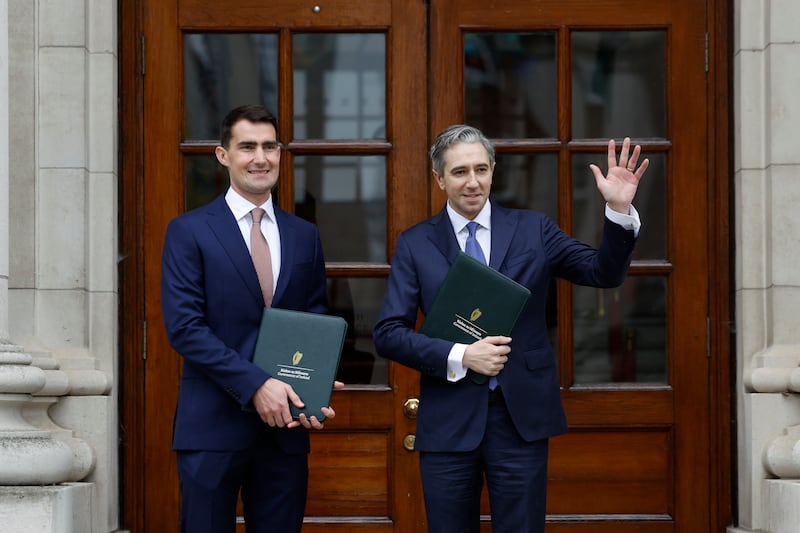
Tánaiste and Minister for Finance Simon Harris and Minister for Public Expenditure Jack Chambers have been taking live questions on RTÉ Radio’s Today with David McCullagh from those affected by the budget.
One 80-year-old caller, Noel, is critical of successive governments, saying he and his wife “worked all our lives, paid our taxes”.
Eight years ago, his wife died, he says, adding: “Our government’s reaction was to half my household income,” going down to €243 at the time.
“You could survive on that for a week or two but for it to be a permanent, it’s not just cruel, it’s just not fair.”
Told by McCullagh of the increase of €3 to the living alone allowance, Noel responds: “Please don’t go there.”
“That in itself is a joke. If my lovely wife had survived, she would be receiving €330 a week so the Government are saving that.”
He adds he would love to “meet the genius” behind the €3 increase.
Chambers acknowledges many like Noel are under “significant pressure”.
“Over a two or three year period, we didn’t see an increase in the living alone allowance and we have increased it at a similar level to what we increased it three or four years ago,” he says, adding that it represents a 14 per cent increase.
“I accept, if you look at it in isolation in a single week, it obviously isn’t what many people would expect,” he says, adding however that the full year value will be €1,300 in 2027.
It will also coincide with increases in core welfare rates, including the pension, alongside an increase to the fuel allowance.
Noel tells Chambers not to mention the increase in the fuel allowance, saying it is not an increase.
Noting that the term has effectively been reduced after an extension last year, Noel says the Government “actually reduced the fuel allowance by €32”.
Chambers says that was an “exceptional” extension, adding that the €5 increase is permanent.
Budget struck a ‘balance’, McEntee says in response to Ifac criticism
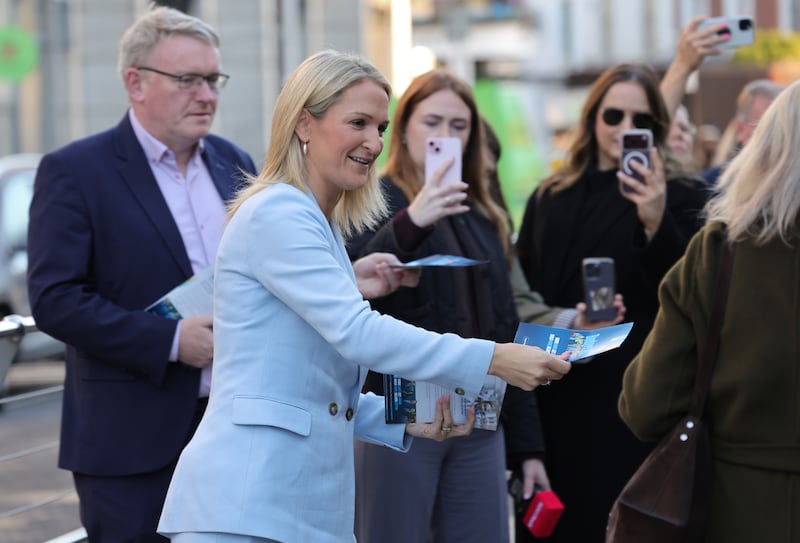
Minister for Foreign Affairs Helen McEntee has responded to criticism by the Irish Fiscal Advisory Council (Ifac) of overspending, and over-reliance on corporation tax, by saying the budget has got the balance right, Political Correspondent Harry McGee reports.
“People are saying we’ve spent too much. There’s people who said we haven’t spent enough. So I think what we try to do is get a balance here,” said McEntee.
She said that spending growth would be maintained at 6 per cent.
Arguing that the spending was an investment in people’s futures, she said it was being put into service, into retrofitting homes, investing in SMEs, and also supports for people feeling the impact of energy price hikes.
The Fine Gael Minister was one of a large number of Fine Gael TDs and Ministers who handed out the party’s pamphlet on Budget 2027 to Luas commuters at Stephen’s Green on Wednesday morning.
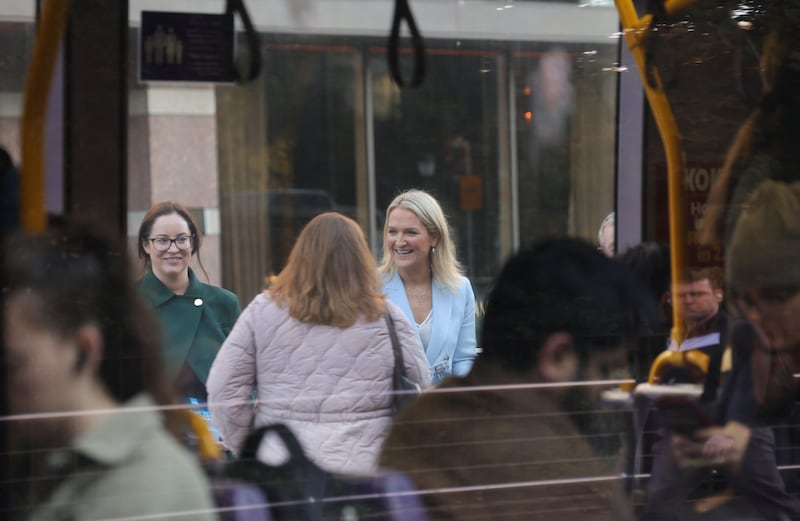
Pressed about the criticism by Ifac she said the Government had done its own figures as well, and the teams in the two Government departments responsible for the budget had set out a trajectory that she said was manageable.
McEntee said the Government was putting an additional €1 billion into the two fiscal buffer funds, on top of the planned €5 billion for 2027.
Asked if Minister for Culture Patrick O’Donovan was the biggest loser of the budget, given that the €100 culture card did not materialise, McEntee said every department had seen an increase.
She also said Chambers was very clear yesterday when saying that the card project, which is part of the programme for government, is still being worked on.
“It wasn’t achieved in this budget but we have three more budgets,” she said.
Asked if O’Donovan was naive in flagging it in advance, she said the commitment from Government was there and that all Ministers wanted to achieve as much as they could in their own departments.
‘We’re trying to protect people’: Taoiseach defends budget

Taoiseach Micheál Martin has defended Budget 2027, saying the Government was trying to protect people “as best we can in the midst of an international crisis”, Vivienne Clarke reports.
Martin said the budget came amid “major international global uncertainty” – oil and energy crises – which is fuelling inflation.
“We’re trying to protect people as best we can in the midst of that international crisis by tax measures for the workers, by a really strong focus on disability over the last two years, and in terms of the childcare costs on families, and reducing those significantly.
“Those three pillars were probably the major beneficiaries of the budget,” he said.
Martin said the “fundamental driver” for putting money aside was demographics, noting Ireland will have “far more older people” in the future, who will be more dependent on social protection and health.
“We will have to provide for that into the future,” he said.
The Taoiseach acknowledged there needed to be a change in focus in the taxation framework, in the composition of revenue coming into the exchequer.
“We have to change focus in our taxation framework to encouraging indigenous enterprise and scaling up enterprise, and that’s why the seed capital gains tax has been reduced somewhat, and why I think we have to do far more to create our own indigenous base, to kind of create a greater balance,” he told Newstalk’s Claire Byrne Show.
“We need to think more about how we scale our own companies, and how we ensure that they have capital available to them to grow and to develop.”
‘People have never felt as poor’ – Mairéad Farrell
Sinn Féin’s spokeswoman on public expenditure, Mairéad Farrell, has said there could have been a fairer way in Budget 2027 for the Government to address the challenges facing workers, Vivienne Clarke reports.
“This State has never been as rich, but people have never felt as poor as they do today.
“The majority of workers were left out of the tax changes that the Government announced yesterday and the problem here is that there actually was a fairer way of doing this and that would have been by cutting the USC from the first €40,000 that people earn.
“That would have actually meant something for all workers, for the majority of workers or the majority of workers today who work hard because the Ministers kept talking yesterday about those who work hard.
“Well I’m telling the Ministers very clearly here, those people who earn under €44,000, the SNAs, all the different people that really contribute to our society and to our communities, they do work hard as well and they should have been supported,” Farrell told RTÉ Radio’s Morning Ireland.
Budget 2027 ‘anything but a workers’ budget’ – ICTU
The general secretary of the Irish Congress of Trade Unions has described Budget 2027 as “anything but a workers’ budget”, Vivienne Clarke reports.
Owen Reidy also said it had been “a wee bit cheeky and gratuitous” for Minister for Public Expenditure Jack Chambers to “make a political point” during the budget announcement about the continuing industrial action by public service workers.
“I thought it was a bit rich. Unfortunately, we’ve heard for the last number of weeks and months that this would be a workers’ budget. It’s anything but a workers’ budget.
“We didn’t look for tax cuts, but we looked for indexation. We needed double indexation because they didn’t do it last year, which means basically that the tax system keeps up to pace with pay increases.
“Workers are probably about 2½ per cent worse off than they should be, so we’re not even standing still.”
The budget had made the ongoing dispute even more difficult to resolve, he told RTÉ Radio’s Morning Ireland.
“The Minister and his Cabinet colleagues need to reflect on this.”
The budget did not change anything in relation to the dispute, he added.
Means test for carer’s allowance to be eliminated in Government’s lifetime – Calleary
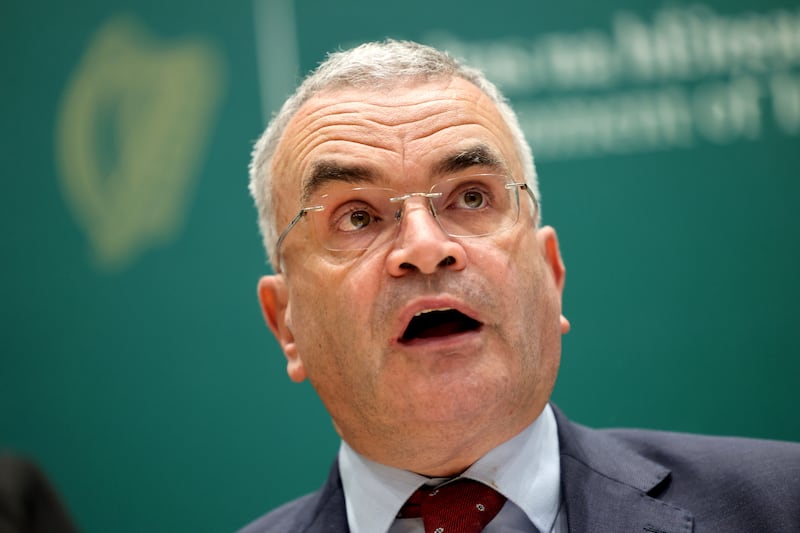
Minister for Social Protection Dara Calleary has said the Government will “get rid of” the means test for the carer’s allowance during the lifetime of this Government, but it has to be done on a “sustainable basis”, Vivienne Clarke reports.
“There’s very clear determination here that we will eliminate the means test. It will be done in the lifetime of the Government. I have other priorities,” he said on Wednesday morning.
Calleary pointed out that a couple on €126,000 a year from next July will get a full carer’s payment. A couple on €155,000 will get a partial payment.
“I have increased the thresholds by 84 per cent in my first two budgets,” he said.
Calleary said he wanted to ensure existing carers were “paid for”.
“Many existing carers have had their payments increased. And increasing the main payments by €10 a week is an investment of €750 million,” he told RTÉ Radio’s Morning Ireland.
The Minister defended the €3 increase in the weekly living alone allowance, saying it was now €25 per week.
“I’ve increased the availability of the fuel allowance,” he said.
For a single person, the means-tested limit for fuel allowance has gone from €27,700 to above €33,000.
“That would bring 10,000 more single people over the age of 66 into the fuel allowance.”
The fuel allowance will be paid over 28 weeks this winter, he added.
The Government was trying to assist with costs, but they could not assist with every cost, he said, adding that supports in the budget would encourage people to go into employment.
Government committed to increasing Defence Forces personnel – McEntee
Minister for Defence Helen McEntee has said increases in Defence Forces spending show “very clearly” the Government is committed to increasing overall spending and “increasing numbers”, Vivienne Clarke reports.
“What we’ve said is we want to continue to increase significantly our investment, our investment in the number of Defence Force personnel that we have.”
Increases in the budget would go towards recruitment for the Naval Service, along with investment in IT, “making sure we have the equipment to fully see what’s going on” such as radar and sonar.
“We’re investing in AI in the same way everybody else is as well,” the Minister told Newstalk Breakfast.
Bid to cut smoking ‘abject failure’, Dáil told
A packet of 20 cigarettes will cost €20.15 following a €1 increase in the budget, bringing the tax take to €16.03 or almost 80 per cent of the retail price, writes Parliamentary Correspondent Marie O’Halloran.
Ireland continues to have the most expensive cigarettes in Europe and now has the second highest cigarette prices in the world behind Australia, where a 20-pack costs €21.02.
The €1 increase was accepted in the Dáil on Tuesday night by 110 votes to 48.
The pro-rata increase in the price of a typical pouch of roll-your-own tobacco is €1.39, bringing the retail cost to €29.72.
Introducing the tax, Minister for Further and Higher Education James Lawless said the increase on tobacco products would yield approximately €63.1 million in a full year, and €5.1 million for the remainder of 2026.
Read the full article here.
Reaction to Budget 2027
Government TDs around Leinster House were largely pleased with the budget package, though the reaction elsewhere was mixed.
Many representative and interest groups welcomed aspects of the budget but said that it did not go far enough.
Owen Reidy, general secretary of the Irish Congress of Trade Unions, said the budget was “a halfhearted apology for last year’s”.
“The Government has taken some bare minimum measures, but it is far from the workers’ budget the Government claimed, and does not make up the ground workers have lost,” he said.
Employers’ group Ibec welcomed aspects of the budget but said it was disappointed the Government had accepted recommendations to increase the national minimum wage.
Read the full article here.
Opinion: Somewhat muted reaction from all sides to budget
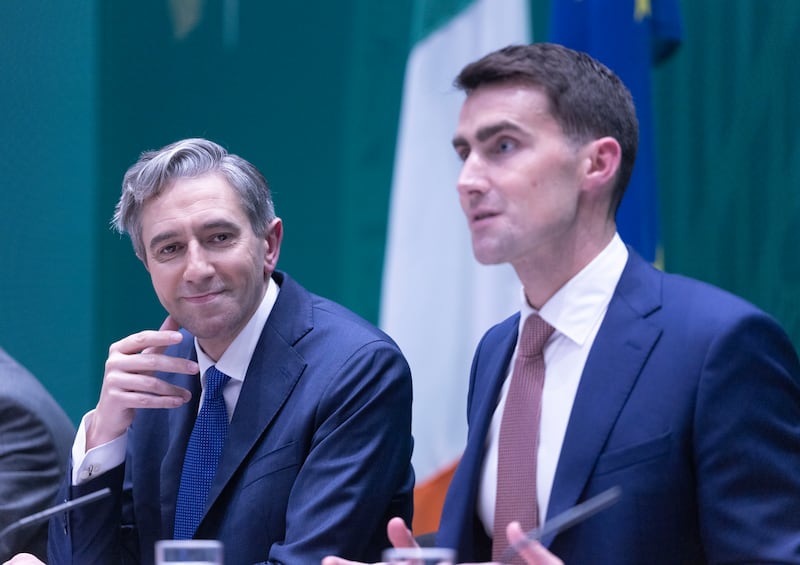
The first budget of the Simon Harris-Jack Chambers combination, and the second of this Coalition, was presented on Tuesday to a somewhat muted reaction from all sides, writes Political Editor Pat Leahy.
Virtually all its main features had been flagged in advance and there were no last-minute surprises to excite supporters or inflame opponents; surprises, after all, can be risky and this Government is highly risk-averse.
The budget speeches were mostly received in polite silence. Government supporters were appreciative, but hardly ecstatic; Opposition TDs were critical but not exactly brimming with righteous fury. The responses flooding into the inboxes of TDs and journalists from the army of interest groups were mostly of the “we welcome ... but not enough was done” variety.
If a budget is an opportunity for a government to provide a statement of what it is about, then this Government is about keeping things going as they are, making incremental improvements, and above all, not annoying anyone.
Read the full article here.
Do you have questions on what Budget 2027 means for you?
The Irish Times has an expert team on hand to answer your queries. You can submit your question in the form below.
Questions will be answered in our Budget Q&A going live today by our experts: Irish Times Deputy Business Editor Dominic Coyle, Beryl Power, director at PwC and Ruth Gilligan, manager, at PwC Private Client Services.
The Irish Times view: Coalition being driven by events
What’s our view on the budget? Well, you can find it here.
The final few paragraphs of our Editorial today reads: “The Government, like many others, is running to try to keep up with cost-of-living pressures. There are tough decisions here, for sure, but this is not an excuse for a lack of longer-term thinking.
“And while it has some welcome measures, the budget gives the impression of a Government responding to events, rather than shaping them. Given the international upheavals this is understandable, to an extent. But continuing to base a public finance strategy on the health of a half dozen multinationals does not look wise.”
Main Points - Full list of Budget 2027 measures
If you want to check what is in the budget here is our detailed list of the Budget 2027 main points.
And here are some of the details on the €1.3 billion income tax package.
- Level at which workers enter 40 per cent income tax rate increased from the current €44,000 for a single person to €46,500
- Personal tax credit, PAYE and earned income credit to increase by €125
- 2 per cent band of USC increased by €1,600 to €30,300
Minister for Finance Simon Harris said the changes would see workers earning €50,000 a year paying more than €700 less in income tax and USC.
Sharp criticism from Fiscal Advisory Council
Trying to make sense of it all, Political Editor Pat Leahy writes in our lead story this morning that the Government “unveiled an €8.5 billion budget package on Tuesday to bring public spending to a record level, and drew sharp criticism from the State’s budgetary watchdog for increasing the reliance on ‘high-risk corporation tax’.
“The package will bring public spending to €125.6 billion next year despite tensions in Government over the insistence of Minister for Public Expenditure Jack Chambers to limit spending growth to 6 per cent next year.”
Good morning, and welcome to our live coverage on the day after Budget 2027. We will be bringing you more details, analysis and reaction over the day.
So, if you are catching up, reaction to the budget has been mixed. The total package of €8.5 billion involves a huge amount of extra spending and yet many groups - notably those struggling with fuel bills - aren’t too happy.
And spare a thought for Patrick O’Donovan, who suffered a very public rebuff when his widely touted plan for a €100 “culture card” voucher for 16-year-olds to attend cultural events was absent from the final document.


